The Train in Your Back Pocket: Winter Loops With a Platform Plan B
Winter route planning has a habit of pretending the weather will behave. We study the forecast on Tuesday, convince ourselves it will hold until Sunday, then spend the last hour of a cold club run squinting at a rear light and calculating how many miles remain. A railway station on the loop changes that maths. It gives the ride an exit, and an exit makes the whole day feel more confident.
The trick is not to treat the train as a failure. Think of it as part of the route: a moving café, a warm waiting room, a way to stitch together a bigger adventure without betting the farm on a four o'clock sunset. At Bee Spoked we like a winter ride that has a platform plan B tucked in a jersey pocket. Here is how to build one.
Start with the platform, not the mileage
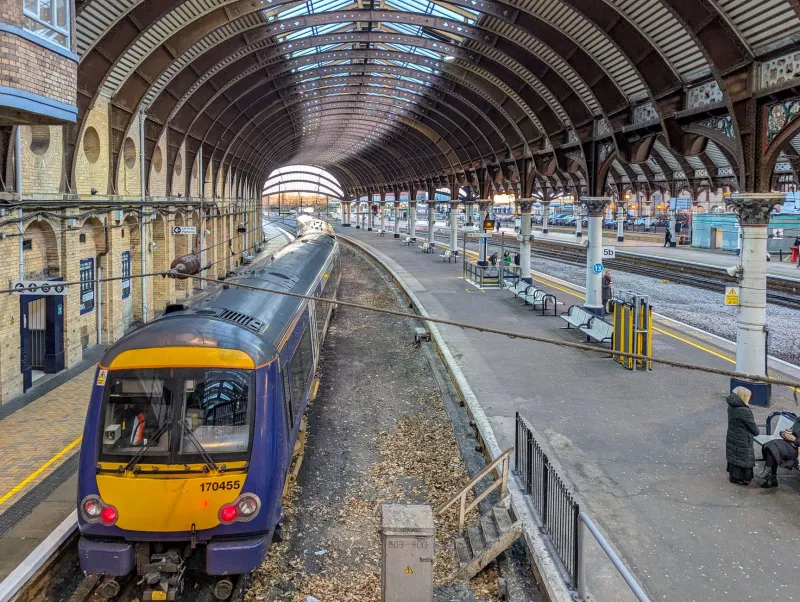
Most route planning begins with a distance and a café. Reverse that. Open a rail map and find a station with a decent service, then draw a loop around it. A useful station does not need to be beautiful. It needs trains, somewhere to wait out of the wind, and a sensible way to get a bike on and off.
Look for stations with at least two services an hour in each direction if you can. A rural halt with one train every three hours is charming in June and a test of character in January. Also check the platform layout: a footbridge with steps is fine for a solo rider with a lightweight bike, less fine for a group with laden winter bikes and tired legs. Step-free access, lifts and wide gates are worth knowing about before the day, not when you are standing in the rain.
Learn the bike-on-train rules before you need them
UK rail is not one uniform system, and bike carriage is a good example. Some long-distance operators require a bike reservation, and spaces are limited. Many local and regional services are first-come, first-served, but peak-time restrictions can catch you out. Rail replacement buses are their own special circle of hell for anyone with a bike, so check before you commit to a route that depends on a particular connection.
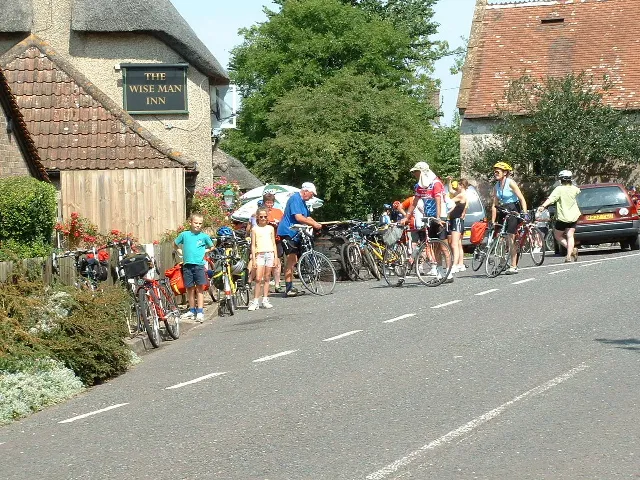
The practical answer is to know the operator, know the reservation rule, and give yourself more slack than you think you need. A bike reservation is not a guarantee that the space will feel generous, especially with panniers, mudguards and a group. Take a short strap or bungee to keep things tidy. Be ready to lift the bike rather than drag it. And if you are riding with a group, decide in advance who is carrying the tickets and who is checking the platform number, because ten cyclists all trying to solve the same problem at once is how train stations become amateur theatre.
Time the loop around the last useful train
The last useful train is not the last train. It is the one that gets you home before you are too cold to enjoy the pint, the bath, or the sensible dinner. In winter, aim to reach your bail-out station with at least twenty minutes to spare. That buffer covers a mechanical, a missed turn, a slow café, or the group's collective inability to agree on which side of the station the entrance is on.
Build two escape points into a longer loop if you can: one halfway round and one nearer the end. A figure-of-eight route around a station is ideal because it lets you cut the day short without retracing every mile. If the light fades early or the temperature drops faster than forecast, nobody has to make a heroic call in the middle of a lane. You simply point at the nearest platform and everyone knows the plan.
Café stops that work with wet gloves
A station café is a beautiful thing: warm, unpretentious and usually used to people in odd clothing. Village halls, community cafés and platform kiosks often beat the polished cycling destinations because they are built for people who need to sit down and get warm, not pose beside a flat white.
Check winter opening hours before you build the route around them. A café that closes at three in the afternoon is a different proposition in December. And keep the stop short enough that nobody cools down completely. The best winter café stop is twenty minutes of soup, tea and gentle banter, followed by the discovery that everyone's gloves have somehow become colder than when they went in.
Keep the group together when the plan changes
A bail-out route only works if the group has agreed how to use it. Share the route file, name the stations, and set a rule: if anyone calls the train, the group stops at the next safe place and works out who is going with them. No one should be left to negotiate a bike space alone because they were too polite to speak up.
It also helps to have a rough split plan. If half the group wants to press on and half wants the platform, that is fine. Winter riding should not be a test of stoicism. The ride leader's job is not to drag everyone round the full loop; it is to make sure everyone gets home with their fingers intact.
Pack for the platform as well as the ride
A charged phone, a bank card, a light you can run on a platform, and a thin cap or buff make the train option far less grim. If you are using a station as a bail-out, know whether it has a ticket machine, a tap-in point or a staffed window. Smaller stations can be surprisingly sparse in the evening. A little food and a warm layer in the bag are not just ride kit; they are waiting-room kit.
The ride is better with an exit
A winter loop with a station in the middle is not a softer ride. It is a smarter one. It lets you plan a bigger day, take on a longer café stop, or ride into the dying light without the low-level dread of being stranded. The train is not there because you failed. It is there because you planned properly.
So next time you open a map, look for the little red rail symbol before you look at the elevation profile. Choose a loop where the platform is part of the story. Then ride it with a bit more confidence, a bit more warmth, and the pleasant knowledge that the day has a back door.