The Paper Square in Your Pocket: A Case for Getting Mildly Lost in 2026
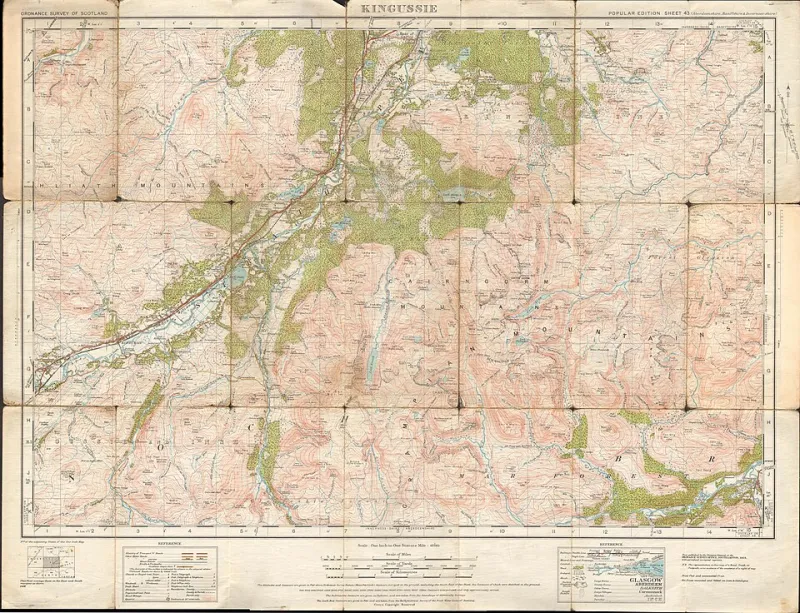
Photo: Director General of the Ordnance Survey, UK, Public domain, via Wikimedia Commons
There is a moment on a Sunday ride when the computer beeps, the route line wobbles, and you realise you have been following a magenta thread for twenty miles without once looking at the shape of the land. The ride has been efficient. It has also been a bit like reading a book with the pages turned for you.
I am not anti-GPS. I use one. It has rescued me from many a wrong turn and one memorable encounter with a ford in February. But there is a different kind of ride available to anyone willing to fold an Ordnance Survey sheet into quarters and stuff it in their jersey pocket. It is slower. It is occasionally confusing. It is, I would argue, more fun.
The Fold Lines Are the Point
A paper map does not give you a single answer. It gives you a landscape. You can see the contour lines bunching up before you commit to a climb. You can spot the difference between a yellow road and a white one. You can trace a bridleway across a field boundary and wonder whether the gate at the end will be open. You can see the pub, the church, the farm shop, and the little triangle of woodland that might make a decent stop.
A GPX file says: turn left here, then right, then straight for four kilometres. A map says: there is a lane over there that looks interesting, and if it goes nowhere you will end up somewhere else. That somewhere else is often the best part of the ride.
A Very Small Plan for 2026
Here is the nudge. Pick one Sunday in 2026. Buy or borrow the relevant OS Landranger sheet—1:50,000 is plenty for road and lane riding; Explorer 1:25,000 is lovely if you plan to poke about on bridleways. Spread it on the kitchen table. Find your nearest town at the edge of the sheet. Trace a loop with your finger. Mark three things: a café, a church, and a bit of road you have never ridden.
That is the whole plan. No route file. No turn-by-turn. Just a paper square, a rough idea, and the willingness to stop and refold it at a junction while a dog walker asks if you are lost. You are not lost. You are consulting.
What You Need (and What You Don't)
You need a map. You need a map case or a zip-lock bag, because British weather does not respect your romantic notions about paper. You need a compass if you are heading onto bridleways, and the knowledge that a grid reference is not a magic spell but a useful thing to know. You need a bit of cash for the café that does not take cards.
You do not need a power bank, a mount, a route file, or a subscription. You do not need to plan every lane. In fact, the whole point is to leave a few gaps. The map is not a contract. It is a menu.
The Café Stop Finds You
There is a particular pleasure in a café stop you did not plan. The computer route takes you past the same chains, the same petrol stations, the same identikit stops. A map lets you spot the village hall with a hand-painted sign, the farm shop with a bench outside, the garden centre that does an unexpectedly excellent flapjack. These places are not on the route because they are not on the route. They are just there, and you are there, and that is enough.
On a paper-map ride, the stop becomes part of the navigation. You pause, refold, check the next lane, and decide whether to push on or have another cup of tea. That is not inefficiency. That is the ride.
The Gentle Art of Being Wrong
Paper maps make you wrong more often. You take the wrong fork. You misread a bridleway symbol. You end up on a lane that turns into a farm track and then into a field. You have to turn around. This is not a failure of the map. It is the map doing its job: showing you the land as it is, not as your route file assumed it would be.
Some of my favourite rides have been the ones where the plan fell apart. A closed road led to a detour through a village I had never heard of. A missed turn put me on a ridge with a view I would otherwise have flown past. A paper map does not recalculate. It waits for you to work it out. That pause is where the good stuff lives.
Try One Ride This Year
You do not have to abandon the computer. Use it for the commute, the training loop, the club run. But for one Sunday in 2026, leave it at home. Take a map. Take a pencil. Take a vague plan and a decent waterproof. Ride until you find a lane you like, then ride a bit further. Stop when you see a café sign. Refold the map badly. Ask someone at a junction if the road goes through.
You will almost certainly end up somewhere you did not intend. That is the point. The paper square in your pocket is not a worse version of your GPS. It is a different invitation. Fold it, ride it, and see where the field boundaries take you.