Cake, Church Halls and a 50-Mile Loop: Planning a Ride Around Proper Community Cafés
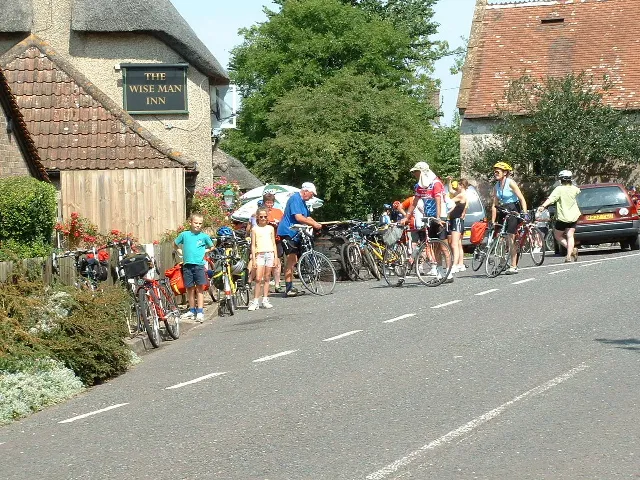
Photo: Chris Shaw, CC BY-SA 2.0, via Wikimedia Commons
Some of the best rides in Britain are not built around a climb, a laminated smoothie menu or a segment leaderboard. They are built around a village hall with a hand-written sign, a church café that opens on Saturdays and a community shop where the kettle is already on. The stop becomes the anchor; the miles arrange themselves around it.
At Bee Spoked we like a route with a proper pause. Not a grab-and-go coffee beside a dual carriageway, but a sit-down breakfast, a slice of cake and a chat with the people who run the place. It changes the rhythm of the day. You ride to arrive, not just to tick off miles.
Pick the pause, then draw the loop
The first rule of a community café route is simple: choose the stop before you choose the roads. Find a village hall, church café, community shop, old station buffet or WI tea room that opens on the day you want to ride. Check the opening hours twice. Rural places often run on volunteers and may close early, shut for a funeral or open only through the summer. A quick phone call or a look at the parish newsletter is never wasted.
Once you have the stop, work backwards. Aim for roughly half the ride before breakfast and half after it. A 50-mile day might mean 22–25 miles to the café, a proper 60–75 minute pause, then a slightly longer return leg. If the café is only 15 miles from home, the ride becomes a short loop with a long sit in the middle. That can be lovely, but it is a different kind of day.
The 40–60 mile method
For a 40–60 mile route, think in three parts: the approach, the pause and the return. The approach should be the easier half if you are riding with a group, because hungry riders get tetchy. The return can carry a few more climbs or a headwind, but not both. Leave a bailout option: a train station, a bus route or a shortcut back through a market town.
Use quiet lanes, bridleways where suitable and minor roads rather than fast A-roads. In the UK, a route that looks direct on the map can turn into a grim mile beside lorries. Plot with a cycling-specific map or app, check surface types and look at the elevation profile. A village hall at the top of a hill is a great stop, but everyone will remember the climb on the way there.
A sample UK-style route template
Here is a simple template you can adapt to your own patch. Imagine a 52-mile loop from a market town:
- Outbound: 23 miles on lanes and quiet B-roads, with one gentle climb and a water stop at a community shop.
- Breakfast stop: Village hall café, 10am–11.15am. Tea, bacon roll, cake, fill bottles.
- Return: 29 miles via a different set of lanes, one optional hill and a final flat run into town.
- Bailout: Train station at mile 38, plus a shortcut that cuts 8 miles if the weather turns.
Put the café address, opening hours and phone number on your route card. Add the nearest station and a note about whether the hall takes cash. Many community cafés do, and some have unreliable signal for card machines.
Etiquette for riders at community cafés
A village hall café is not a chain. It is usually run by volunteers, a church group or a community trust, and the profit goes back into the building or the village. Act accordingly.
- Buy something proper. A round of teas and a slice of cake is the entry fee. Do not sit down with your own flask and sandwiches.
- Carry cash as well as a card.
- Call ahead if you are bringing a group of eight or more. Volunteers can handle a sudden rush, but it helps to know.
- Do not block the entrance with bikes. Lean them somewhere sensible, away from the door and the disabled access.
- Clear your table, take your rubbish and thank the people serving. It sounds obvious; it is not always done.
- Respect the churchyard or hall grounds. No gel wrappers in the hedge.
A route card worth carrying
Write a simple route card before you go. It should include the café name and postcode, opening hours, the bailout station, the nearest bike shop and a rough time plan. Add a note of where the last water tap is. In summer, that matters as much as the cake.
If you are planning a 2026 season of café rides, keep a little notebook of places you have found. Village halls, church cafés and community shops are often invisible online. The best ones get passed around by word of mouth, scribbled on route cards and remembered for the welcome as much as the breakfast.
The ride home
The ride home should feel like the second half of a good conversation. You have eaten, you have warmed up, and the lanes are quieter than they were at nine in the morning. Take the long way if the weather is kind. Stop for a photo. Let the route be a day out, not a race to the next town.
That is the quiet magic of a community café ride. The miles still count, but the pause is the point.