Nobody's Bag, Everybody's Rescue: A Shared Roadside Kit for Club Runs
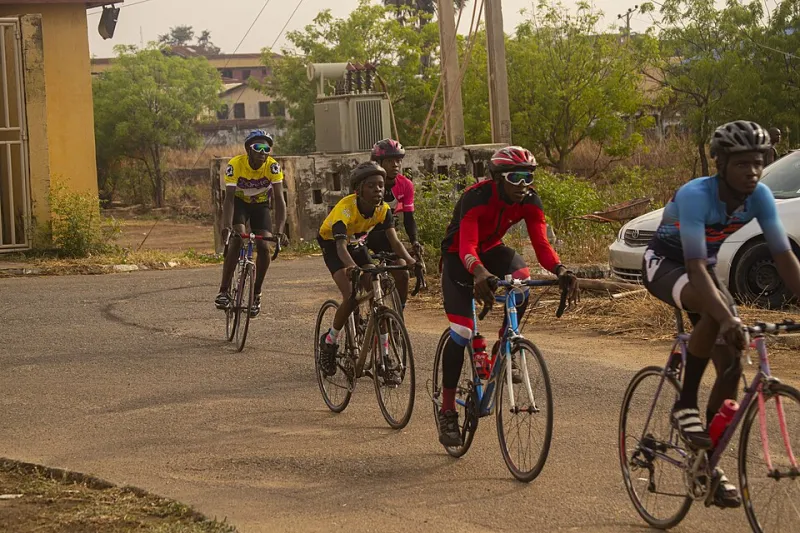
Photo: James Moore200, CC BY-SA 4.0, via Wikimedia Commons
Every club has a version of the same story. Eight riders, a lane somewhere between two villages, and a snapped chain on the steep bit just after the ford. Twenty-five minutes of standing about in the cold follows, not because nobody knows how to fit a quick link, but because nobody has one. Three people offer a multitool. Two of those multitools have a chain breaker. None of them has the link.
The fix isn't a stern email about personal responsibility. It's a bag. One bag, owned by the club, carried by whoever's turn it is, checked when it gets home. Call it a communal kit, a shared spares bag, or the club's get-out-of-jail pouch. What matters is that it exists before the chain snaps.
Why the club should own it, not the riders
Individual saddlebags work on the principle that everyone is equally prepared and equally unlucky. In practice the strongest rider carries nothing because they never puncture, and the newest member carries three tubes, two pumps and a small library of CO2 cartridges because they're anxious. The weight and the cost land in the wrong places.
A club-owned kit does three useful things at once. It stops the ride depend on the least-prepared person's decisions. It spreads the cost across the whole membership rather than the conscientious few. And it creates a checklist, which is the real magic. A bag with a known inventory can be counted. A bag made of everybody's pockets cannot.
There's a community angle too, and it's not sentimental. When the kit belongs to the group, fixing someone's bike stops being a favour and becomes routine maintenance of the club's Sunday. That shift matters for newer riders, who often hold back from group rides because they're afraid of being the person who holds everyone up.
What actually goes in
The temptation is to build a portable workshop. Resist it. The kit should solve the failures that stop a ride on a British lane in the wet, and nothing else.
Start with the puncture layer. Two inner tubes in the sizes the club actually rides (700x25 to 28 covers most groups), three decent tyre levers, and a patch kit for the second and third flat. Add a tyre boot, which can be a two-inch section of old tyre or a folded piece of tough plastic. A sidewall gash from flint or a pothole edge is a genuine ride-ender without one.
Then the drivetrain layer. A quick link in the two most common speeds in the group, a small chain tool on the multitool, and a sachet of chain lube. Chains rarely fail on the flat. They fail when someone shifts under load on a wet climb, and they fail more often in winter when everything is grinding.
The awkward-failure layer is where the shared kit earns its keep. A spare rear mech hanger is the single most useful item nobody carries, because hangers are model-specific and nobody wants to buy a £15 part for a bike they might not bend. A club can buy a handful of the most common hangers for its membership and keep them in the bag. Add a spoke key, a few zip ties, a short roll of electrical tape, and a pair of nitrile gloves so the person doing the work doesn't spend the rest of the ride with black hands.
Finally, a printed inventory card, laminated, clipped to the bag. It takes twenty minutes to make and it is the difference between a kit and a lucky dip.
The £40 breakdown
A realistic starting budget for a club of fifteen to twenty riders:
- Multitool with chain breaker: £12
- Two inner tubes (shared sizes): £8
- Three tyre levers: £3
- Patch kit: £3
- Two quick links, mixed speeds: £4
- Spare mech hanger (bulk-bought common models): £5
- Zip ties, electrical tape, nitrile gloves: £3
- Chain lube sachet: £2
Total: around £40. A pump and a CO2 inflator usually live on individual bikes already, so the kit doesn't need to duplicate them. If the club has funds, add a tubeless plug kit for £10 and a tenner's worth of cash for the cafe stop that gets abandoned.
Splitting the cost and the weight
The fair model is simple: the club buys the kit once from general funds, and consumables are covered by a small annual levy, something like £2 per member. That pays for tubes, links, patches and lube, which are the things that actually disappear. It also removes the awkward conversation at the roadside about who owes whom for a tube.
Carrying is a rota, not a burden. One rider per ride takes the bag, and the rota lives in the same place as the ride list. Rotate monthly rather than weekly so people aren't swapping a bag around every seven days. The person carrying it should be someone who is unlikely to be dropped, or at least someone the group is willing to wait for, which is the same thing on most club runs.
The handover routine
This is the part that gets skipped, and it's the part that decides whether the kit survives a season.
Before the ride, the caddy checks the inventory card and confirms the bag is complete. One message in the group chat, a photo of the open bag, and it's done. After the ride, the bag is emptied onto a workbench or a kitchen table, counted against the card, and anything used is noted. Replacement happens within the week, with the receipt photographed and sent to whoever holds the club funds. No receipt, no reimbursement, which sounds bureaucratic until you've watched a £40 kit quietly become a bag of empty wrappers.
A simple rule helps: whoever breaks the seal on a consumable is responsible for replacing it. Not paying for it, just replacing it. The club pays. The rider remembers.
What it won't fix
Be honest about the limits. A shared kit won't rescue a cracked frame, a dead electronic groupset battery, a seized freehub, or a wheel that's properly tacoed. Those are calls for a taxi, a train, or a very patient friend with a car. Knowing where the kit's usefulness ends is part of using it well.
What it will do is turn the most common roadside dramas into a ten-minute pause. A flint puncture in the lanes. A pinch flat from a pothole you saw too late. A chain that let go on a wet climb. A hanger bent by a stick on a hedge-lined descent. A valve ripped off by an overenthusiastic mini-pump. None of those need a hero. They need a bag with the right contents and a club that checks it on Monday.
Build it once, count it often, and the Sunday ride stops being a lottery.