Spare Steed, Clean Conscience: Setting Up a Loaner Bike That Comes Home Happy
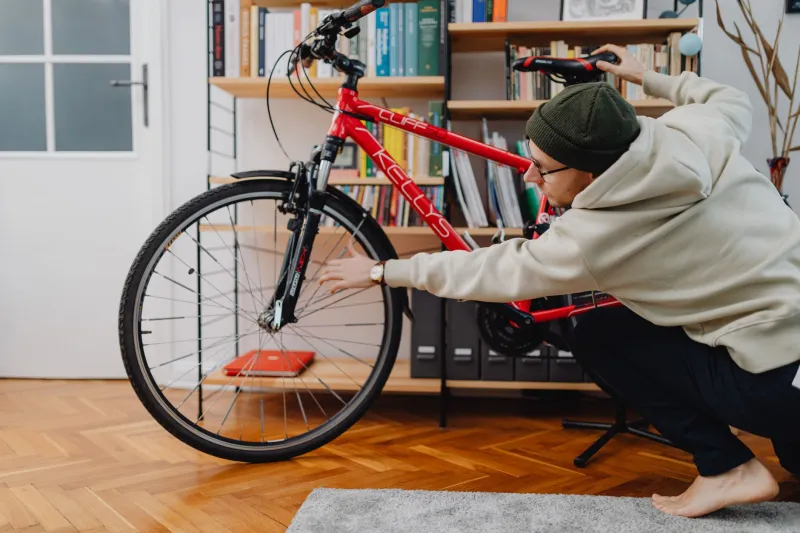
Every shed in Britain has one — the spare bike. The one that was going to be the winter hack, or the commuter, or the bike you keep meaning to sell. It hangs on a hook, quietly collecting cobwebs and the occasional spider, until a friend texts: any chance I could borrow a bike this weekend?
Saying yes is easy. Saying yes well is a slightly different job. A loaner that fits badly, brakes oddly or arrives with a flat rear tyre will turn a nice afternoon into a rescue mission — and you into the person fielding phone calls from a lay-by near Ashby-de-la-Zouch. A little prep, though, and the spare bike becomes the best recruitment tool the cycling world has: someone rides once, has a lovely time, and suddenly they own a bike too.
Here is how to make the handover boring in the best possible way.
Fit first — and fit fast
You are not doing a full bike fit. You are doing the fifteen-minute version that stops knees hurting and shoulders aching.
Saddle height is the big one. The heel-on-pedal method is crude but effective: with the saddle at the right height, a rider sitting square on the saddle with their heel on the pedal at the bottom of the stroke should have a straight leg, just about. If they are rocking their hips to reach, drop it a centimetre. If their knee is at a sharp angle, raise it.
Reach comes next. A rider who feels stretched will hate every minute. Slide the saddle forward or back a touch, and if the stem is easily swapped, do it. Otherwise, rotate the bars slightly to bring the hoods closer, and check that the brake levers are reachable from the drops — small hands on deep drops is a classic loaner misery.
Mark the result. A strip of electrical tape around the seatpost at the right height means the next borrower (or you, in March) can reset it in seconds.
The five-minute safety sweep
Before anything leaves the shed, run the M check: hubs and quick releases, then up through the frame, headset, bars and stem, then down to the bottom bracket and pedals. You are looking for play, cracks and anything loose.
- Wheels: spin them, check for wobble, and check the quick releases or thru-axles are properly closed, not just tight-ish.
- Brakes: both should stop the bike, not just slow it. Check pad wear and that the lever does not pull to the bar.
- Tyres: look for cuts, embedded glass and perished sidewalls. Pump to the pressure written on the sidewall, not the pressure you happen to like.
- Chain: a worn chain on a loaner is fine, but a dry one is not. A drop of lube takes ten seconds.
- Bolts: stem, seatpost clamp, bottle cage, rack mounts. Torque them properly. A loose stem is the sort of thing that ends a ride early.
If something is marginal, fix it or swap it. The loaner does not need to be your best bike, but it does need to be a safe one.
Gears and brakes: five turns, not fifty
A newcomer does not need your carefully curated 1x gravel ratios. They need gears that shift when asked and a lowest gear that gets them up the local hill without walking.
Check the indexing on the stand: run it through the block, and if it hesitates, half a turn on the barrel adjuster usually sorts it. Set the low limit so the chain cannot drop into the spokes — that one is non-negotiable on a borrowed bike.
On brakes, wind the reach adjusters in if fitted. If they are not, and the levers are a stretch, consider swapping to a bike that suits. Then check the pads are not glazed and the rims are not worn through.
Tyres, mudguards and the British compromise
A loaner in the UK needs to cope with a damp cycle path in November. That means sensible tyre pressure (softer than you think), a tread that is not a racing slick, and — if you have them — mudguards. There is no quicker way to put someone off cycling than a stripe of grit up their back.
Fit lights if the ride might run late, and check the batteries. A rear light with a dying cell is worse than no light, because it teaches the wrong lesson.
Pedals and the little things
Flat pedals with pins, and a pair of ordinary trainers, is the kindest setup for a first ride. If they ride clipped in, fine, but do not assume.
Then build the little kit: a saddle bag with a spare tube, tyre levers, a multitool and a pump that actually works. Show them how to use it before they leave, not over the phone later. Add a bell, a bottle cage, and a lock if they are stopping anywhere.
The handover note
This is the bit most people skip, and the bit that prevents the most phone calls. A plain card, taped to the top tube or texted over, with:
- Saddle height, in centimetres, and where the tape mark sits
- Tyre pressure, front and rear
- How to shift: left hand front, right hand rear, and do not cross-chain
- Brake notes: which lever is which, and a reminder that the front brake is the strong one
- Your phone number, and a note that a broken thing is not a crime
- The return date, and where the bike lives
Add a photo of the bike on your phone before it goes. It sounds fussy; it takes ten seconds, and it means you both know what state it left in.
Logbook etiquette
A borrowed bike is a small act of trust. Keep it small by being clear. Lend the bike you can afford to lose, not the one with the carbon wheels and the sentimental frame. Agree a return date in writing, even if it is a text. Say what happens if something breaks: tell me, do not quietly replace it with a part off the internet.
And when it comes back, check it over before it goes back on the hook. Ten minutes with a cloth and a spanner, and the spare bike is ready for the next person. Which, if you have done this right, will be sooner than you think.