Rainproof Roll-Up: Turning a Commuter Bike Bus Into a Winter Habit

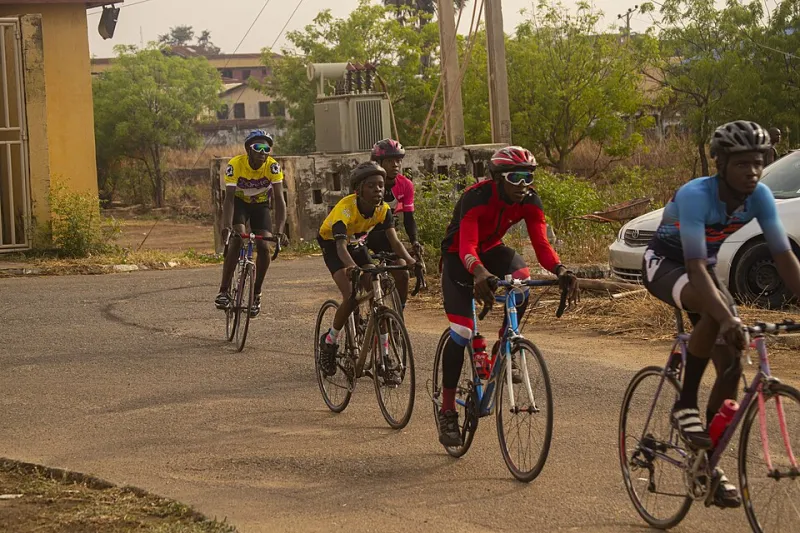
Photo: cyclists commuting together on a rainy British city street at dawn with bike lights, via www.artchive.com
There is a particular kind of British morning in November when the alarm goes off, the window is grey with condensation, and the idea of meeting other people at a lamppost before 7:30 feels faintly ridiculous. That is exactly the morning a bike bus earns its keep. Not because it is heroic, but because it is ordinary. A few riders, a known route, a time that does not move. The swarm does the rest.
A bike bus is not a club run and it is not a race. It is a loose arrangement of commuters travelling the same way at the same time, looking out for each other. It can be three people or thirteen. It can end at a station, a hospital, a school gate or an office park. The point is that it exists on a wet Tuesday in 2026, not just in the sunny group-chat phase.
Pick a route that people can actually use
Start with the boring question: where do people actually need to go? A route that looks lovely on a Sunday map may be miserable at 7:15am, with rat-running traffic, unlit towpath sections and a right turn that takes ten minutes of nerve. Recce it at commuting time, on a weekday, in the dark. Then recce it again in the rain.
Good bike-bus routes tend to use quieter residential streets, protected cycle lanes where they exist, and short, obvious links between them. They avoid dual carriageways and fast A-roads unless there is a genuinely safe crossing. Canal towpaths can be excellent, but check lighting, surface and whether the gate that is open at 6pm is locked at 7am. Keep the route simple enough to describe in one sentence: “Meet at the war memorial, follow the greenway to the station, finish by the ticket hall.”
Build in bail-out points. If someone is running late, they can join at the second corner. If the weather turns, there is a station or a café within a mile. A bike bus should not feel like a commitment device. It should feel like a bus: useful, repeatable and easy to step off.
Keep the time dull and dependable
The magic of a bike bus is not enthusiasm. It is reliability. Set a time, publish it, and stick to it. “Roll at 7:15” means exactly that, with a two-minute grace period and no endless waiting for the one rider who is always nearly there. If nobody turns up, ride anyway. The following week, someone will.
One person can act as the conductor for the week: posting the route in the group, checking the forecast, carrying a basic kit. Rotate the job so it does not become a quiet burden for the most organised person. Keep the group chat small and functional. Weather warning, route change, “running five minutes late”, done. A bike bus that lives entirely in a group chat is not a bike bus. It is a podcast with helmets.
The etiquette is the whole thing
The informal rules matter more than the hi-vis. Riders should regroup at the top of climbs and after junctions. Call out potholes, glass and parked cars. Ride two abreast only when it is safe and narrow to single file when it is not. Do not half-wheel the person next to you. Do not sprint for the lights. The fastest rider is not the point; the group arriving together is.
A simple sweep system helps: one experienced rider at the back, one at the front, everyone in between. Newcomers should be told where to slot in and what the calls mean. “Car back” and “clear” are not aggressive shorthand; they are the commuting equivalent of holding a door open. If someone has a mechanical, the bus stops or slows until it is sorted. If it cannot be sorted, someone stays with them or helps them to the nearest station. That is the whole insurance policy.
Winter-proof the bikes, not just the riders
British winter is a grinding test of small details. Mudguards are not a style choice; they keep spray out of faces and water off drivetrain parts. Lights should be charged at work or at home, not left to the last minute. Two rear lights are better than one, and reflective ankles or overshoes do more than most people expect because they move.
Check the bike before the season properly arrives: brake pads, tyre pressure, chain lube, gear shifting, rack bolts. Salt and grit chew through neglected chains and rims. A quick rinse with cold water after a mucky ride, followed by a re-lube, is worth more than an annual deep clean. Carry a spare tube, tyre levers, a mini pump and a multitool. Add a couple of zip ties and a small cloth. None of it is glamorous. All of it keeps a morning moving.
Have a weather policy before you need one
Bike buses survive winter because they decide what they will and will not do. Rain is usually fine with the right kit and a shorter route. Ice is not. Agree a simple line: if there is a Met Office ice warning or the side streets are glistening, the bus is off and everyone uses their own plan. High wind means avoiding exposed bridges and towpath stretches. Snow is a cancellable event. No one should feel judged for taking the train.
The point is not to prove toughness. The point is to keep the habit alive. A bike bus that cancels sensibly in bad conditions will still be there when conditions improve. One that guilt-trips people into sketchy mornings will quietly dissolve by January.
The quiet payoff
After a few weeks, something shifts. The same faces appear at the same corner. Someone mentions a better cut-through. Someone else has a spare light bracket. The commute stops being a solo negotiation with traffic and becomes a small, rolling piece of local life. It is not a campaign and it does not need a committee. It is just a handful of people who have decided that the morning is better shared.
Start with three riders. Pick a corner. Publish a time. Ride it in the rain. The bike bus does not need a launch event. It needs to turn up next week.