Blown Home: Designing a One-Way Ride That Lets the South-Westerly Do the Talking
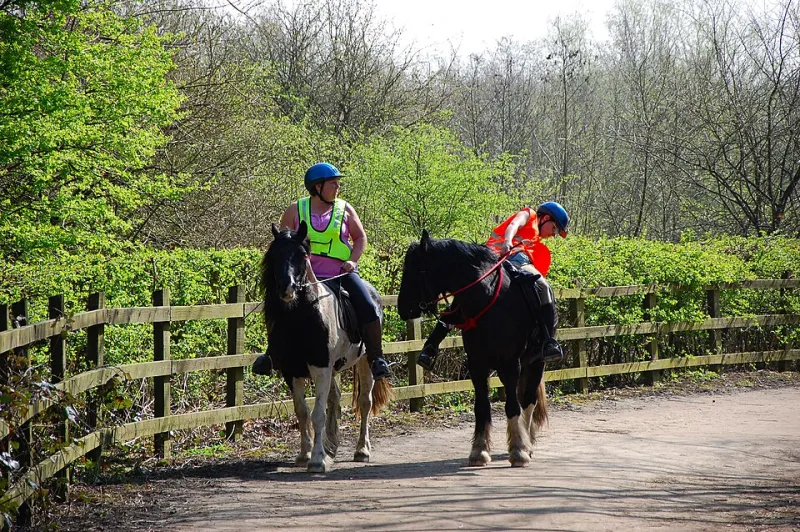
Photo: Ronald Saunders from Warrington, UK, CC BY-SA 2.0, via Wikimedia Commons
There is a particular kind of optimism that comes from standing in a car park at 7am, pointing north-east and saying, “Well, the wind’s behind us.” Sometimes it is. Sometimes it is behind you for three miles, then sideways for fifteen, then directly in your face on the only exposed ridge of the day. A point-to-point ride built around the prevailing south-westerlies is not about chasing a free ride. It is about stacking the odds, then making sure the day still makes sense when the odds change.
Start with the return, not the route
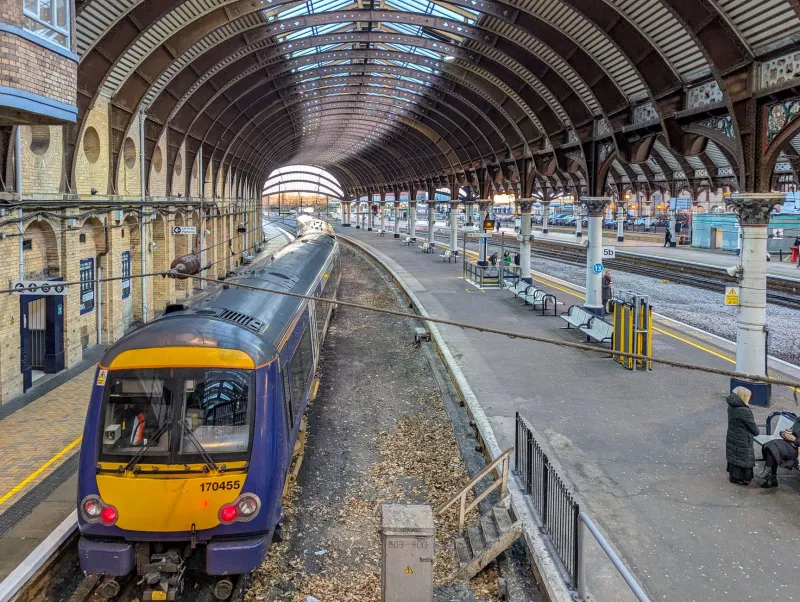
The most useful route-planning decision happens before you look at a single lane. Where does the ride finish, and how easily can you get home? A point-to-point route is only as good as its railway station. Pick a finish with regular services, a sensible bike policy and a not-too-punishing walk from the café. Then work backwards.
In practice, that often means choosing a corridor rather than a fixed line. A railway line running roughly parallel to your direction of travel is a gift: it gives you stations every twenty or thirty miles, and it gives you permission to abandon the plan without turning the day into an epic. A finish at a junction station is better than a finish at a halt with three trains a day and a bench that faces a bin. Check the operator’s bike rules before you commit, especially if you are travelling in a group. A route that ends well is a route you will actually repeat.
Read the forecast like a rider, not a sailor
Wind speed is the headline, but it is not the story. Look at direction, gust spread and how those two things behave through the day. A steady fifteen miles per hour from the south-west is a very different animal from ten to twelve with gusts of thirty. The first can be manageable; the second can turn an exposed lane into a wrestling match.
Use a forecast that shows hour-by-hour direction, and pay attention to the local shape of the land. A south-westerly that is helpful across open vale can be a crosswind on a north-facing ridge, and a crosswind on a loaded bike is rarely the neutral experience the arrow suggests. Add rain, low temperatures and a headwind on the return leg of a loop and you have a recipe for a day that feels much harder than the numbers imply. Wind chill is real. So is the effort of holding a line when the hedgerows break and the bike starts to feel like a kite with ambitions.
It also helps to know what “tailwind” means in practice. On exposed lanes, a tailwind can still feel like work. You are not being pushed along a velodrome; you are managing cross-gusts, rolling terrain, rough surfaces and the small corrections that keep you out of the verge. A tailwind lowers the average effort, but it does not remove the climbs, the drag or the need to eat. Treat it as a discount, not a free ticket.
Build the route around bailouts
The best point-to-point rides have an escape hatch every hour or so. That might be a station, a town with a café and a bus, or a shortcut that cuts off a loop without dumping you on a dual carriageway. Mark these on your device and on a piece of paper. When the weather turns, you want to be making a decision, not squinting at a screen with cold hands.
A useful rule is to plan the route so that the hardest and most exposed section comes in the middle, not at the end. That way, if the wind is stronger than forecast or the rain arrives early, you can trim the day without missing the best bits. It also means the final miles are more likely to be on sheltered lanes or a straightforward run into town. Nobody wants to finish a point-to-point ride by grinding into a headwind on a featureless bypass.
Make the route work when the wind ignores you
A route that only works with a perfect south-westerly is not a route; it is a bet. The better approach is to design a line that is enjoyable in two or three weather scenarios. Use lanes with hedges and trees where you can, and save the open moorland or fenland stretch for a section you can cut short. Choose a direction that gives you options rather than a single heroic line. If the wind swings, you want to be able to say, “Fine, we’ll take the valley route and the earlier train,” rather than “We have to keep going because there is no other way home.”
This is where the workshop wisdom comes in. Before a one-way day, check the basics that wind and weather expose: brakes, tyre pressure, mudguards, and the security of anything strapped to the bike. A loose flap or a flappy jacket can turn a helpful tailwind into a day of irritation. Pack a small repair kit, a proper layer and a backup route. The bike does not need to be expedition-ready, but it should be honest about the forecast.
The point is the day, not the proof
A point-to-point ride built around the prevailing winds is a lovely thing when it comes together: a steady push across familiar country, a train home, and the quiet satisfaction of having used the weather rather than endured it. But the real skill is not in predicting the wind. It is in building a day that still feels like a good ride when the forecast gets it slightly wrong — which, in the UK in 2026, remains one of the few certainties we have.
Give yourself the return first, the bailouts second and the heroic finish last. Then let the south-westerly do whatever it is going to do. You will still get home.