Ten Minutes at the Gate: Adding a Workshop Bench to Your Bike Jumble
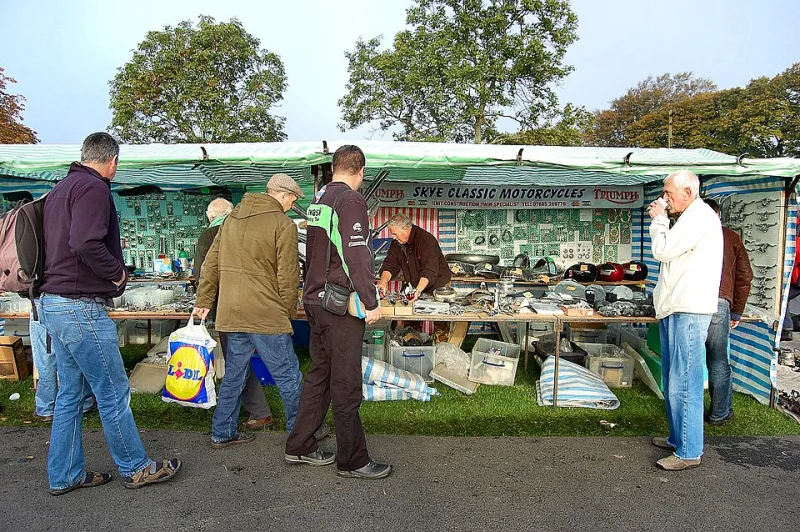
Photo: Ronald Saunders from Warrington, UK, CC BY-SA 2.0, via Wikimedia Commons
A good bike jumble has a certain smell to it: old rubber, chain oil, damp gazebo canvas and the tea urn doing its best. It also has a certain risk. Somewhere between the tatty signs and the hopeful haggling, a buyer can end up with a bike that looks fine in the church hall light and feels decidedly less fine at the bottom of a hill.
That’s where a workshop bench earns its place. Not a stern inspection lane, not a rolling MOT, and definitely not a chance for someone with a cone spanner to lecture the room. Think of it as a ten-minute second opinion: a free, friendly check that helps sellers price honestly, helps buyers understand what they’re taking home, and keeps genuinely dangerous machines out of circulation without turning the day into a safety seminar.
The bench is not a bouncer
The first thing to settle is tone. A jumble is a community event, not a courtroom. The bench should feel like the bit of the workshop where someone leans over and says, “Before you hand over forty quid, have a look at this.”
Put it near the entrance if you can, but not blocking the door. A small gazebo, a folding table, a repair stand, a floor pump, decent lighting and a box of basic tools will do. Add a clipboard, a roll of masking tape, a pen that works, and a chair for the person doing the talking. If the hall has power, bring a work lamp. If it doesn’t, a battery lantern aimed at the drivetrain is worth more than a whole table of shiny multitools.
Volunteers should be clear about what the check is for: a quick look at the things most likely to put someone on the floor. It is not a full service, a valuation, a guarantee or a warranty. A simple sign saying “Free 10-minute safety glance — not a mechanical report” saves a lot of awkwardness later.
The ten-minute checklist
Keep it short enough that people actually wait for it, and structured enough that volunteers don’t drift into a full strip-down. Two volunteers work well as a pair: one talks to the owner and keeps the queue moving, the other checks the bike. Swap after a couple of hours.
The quick pass can cover:
- Frame and forks: look for cracks, dents, bent dropouts and bubbling paint around joints. Check the fork especially closely.
- Wheels: spin them. Look for badly buckled rims, loose spokes, worn rims and tyres that are perished or rubbed through.
- Brakes: do they pull up? Are pads present and not down to the backing? Are cables frayed or seized?
- Steering: hold the front wheel between your knees and try to turn the bars. Any clunk or looseness needs a proper look. Check the stem and bar clamp bolts.
- Drivetrain: chain wear, stuck links, missing teeth, a cassette that wobbles. It doesn’t need to be silent, but it should move.
- Contact points: saddle, seatpost, pedals. A seized seatpost is a negotiation point; a loose crank is a warning.
- The obvious stuff: missing bar end plugs, loose quick releases, a chain that’s rubbing the frame, brakes that hit the tyre instead of the rim.
You’re not trying to find every creak. You’re trying to spot the things that make a bike unsafe to ride away today. That distinction keeps the queue moving and keeps the advice honest.
The verdict card
A traffic-light system is easy to understand and easy to explain. Use a coloured dot on a luggage tag tied to the bars, plus a couple of handwritten notes.
Green means nothing obvious jumped out. It still isn’t a guarantee. Say that plainly: “Looks sound for a jumble bike. Give it a proper check at home before any long ride.”
Amber means it’s usable with attention. Maybe the brakes need cables, the chain is worn, a wheel is out of true, or the tyres are old. Write the issues down. That tag becomes a bargaining tool for the buyer and a fairer price for the seller.
Red means don’t ride it away as it is. That might be a cracked frame, a bent fork, brakes that don’t work, or wheels that are close to collapsing. This is where the tone matters most. Don’t announce it to the hall. Take the seller aside, show them what you’ve found, and offer options: sell it as a project with the fault clearly labelled, break it for parts, or bring it to the next repair night. If it’s genuinely unsafe, the bike shouldn’t leave as a complete rider-ready machine. Nobody needs a public trial.
The volunteer rota
A jumble day is long. Two-hour shifts are about right. Recruit from the local co-op, the club run, the shop regulars and the person who always has a clean rag in their pocket. You need more than mechanics: someone to greet people, someone to manage the queue, someone to fetch tea and someone to keep an eye on the tag box.
Brief everyone before the doors open. Agree the checklist, the wording for a red tag, and where the “this needs a proper look” bikes go. Keep a shared sheet for notes: bike description, seller’s name if they’re happy, what was found, and whether they took the advice. That’s useful for follow-up and for showing the venue that you ran the day thoughtfully.
Pricing without the hard sell
A bench makes pricing easier because everyone is working from the same information. Sellers can label a bike “needs chain and cables — priced accordingly” instead of pretending it’s ready for a LEJOG. Buyers can compare a cheap bike with a known fault against a more expensive one without guessing.
Encourage round, movable prices. A jumble is not an auction house. Bundles work: bike plus spare wheels, frame plus box of bits, kids’ bike plus helmet. Put a “spares and projects” corner near the bench so red-tagged machines have somewhere useful to go. A dead bike can still be a donor for someone else’s build.
Keep the day human
The best bench moments won’t be the dramatic saves. They’ll be the quiet ones: a parent learning that the squeak on a secondhand kids’ bike is just a dry chain; a seller discovering their old tourer is worth more as a frame than a complete bike; a buyer being told honestly that the cheap fixie is a bargain if they replace the tyres before winter.
Add a follow-up repair night a few weeks later. Invite the amber-tag buyers to bring their bikes back for a proper fettle. Keep a tin for donated spare parts. Put the kettle on. The point isn’t to make every bike perfect on jumble day. It’s to send people home knowing more than they did when they arrived — and to keep the tatty, useful, repairable bikes of the neighbourhood moving through the right hands.